Showing posts with label Tech. Show all posts

Saturday, 29 July 2023

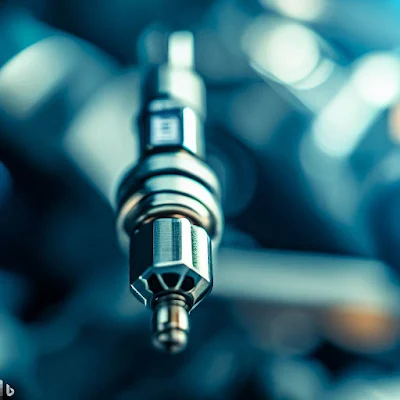
O2 Sensors: What They Are, How They Work and Why You Need Them

Introduction.

O2 Sensors
 O2 Sensors


O2 sensors, also known as oxygen sensors or lambda sensors, are electronic devices that measure the amount of oxygen in your car’s exhaust gas. They help your car run efficiently and reduce harmful emissions. But what exactly do they do, how do they work and why do you need to replace them when they fail? Here’s everything you need to know about O2 sensors.

What Do O2 Sensors Do?

O2 sensors are located in the exhaust system of your car, usually before and after the catalytic converter. They monitor the oxygen level in the exhaust gas and send a voltage signal to the engine computer. The engine computer uses this signal to adjust the air-fuel ratio, which is the proportion of air and fuel that is burned in the engine.

The ideal air-fuel ratio for most gasoline engines is 14.7:1, which means 14.7 parts of air for every one part of fuel. This ratio ensures complete combustion of the fuel and minimizes harmful emissions such as carbon monoxide, hydrocarbons and nitrogen oxides. However, this ratio may vary depending on different factors such as engine load, temperature, altitude and fuel quality.

The O2 sensors help the engine computer maintain the optimal air-fuel ratio by detecting whether the exhaust gas is too rich (too much fuel) or too lean (too much air). If the exhaust gas is too rich, the O2 sensor will produce a high voltage signal (above 0.45 volts) and the engine computer will reduce the amount of fuel injected into the engine. If the exhaust gas is too lean, the O2 sensor will produce a low voltage signal (below 0.45 volts) and the engine computer will increase the amount of fuel injected into the engine.

The O2 sensors also help the engine computer monitor the performance of the catalytic converter, which is a device that converts harmful emissions into less harmful ones. The catalytic converter needs a certain amount of oxygen to function properly. The upstream O2 sensor, which is located before the catalytic converter, measures the oxygen level in the exhaust gas before it enters the converter. The downstream O2 sensor, which is located after the catalytic converter, measures the oxygen level in the exhaust gas after it leaves the converter.

The upstream and downstream O2 sensors should produce different voltage signals. If the catalytic converter is working properly, it should reduce the oxygen level in the exhaust gas and make it richer. This means that the downstream O2 sensor should produce a higher voltage signal than the upstream O2 sensor. If the catalytic converter is not working properly, it will not reduce the oxygen level in the exhaust gas and make it leaner. This means that the downstream O2 sensor will produce a lower voltage signal than the upstream O2 sensor.

The engine computer compares the signals from both O2 sensors to determine if the catalytic converter is functioning correctly or not. If it detects a problem with the catalytic converter, it will turn on the check engine light and store a trouble code in its memory.

How Do O2 Sensors Work?

O2 sensors are made of ceramic material that is coated with platinum electrodes on both sides. The ceramic material acts as an electrolyte that conducts electricity when heated by an internal or external heater. The platinum electrodes act as catalysts that promote chemical reactions between oxygen molecules and electrons.

There are two types of O2 sensors: zirconia and titania. Zirconia sensors are more common and use zirconium dioxide as


What Are O2 Sensors and How Do They Work?


O2 sensors, or oxygen sensors, are essential components of your car's emissions control system. They help to regulate the air-fuel ratio in your engine, which helps to reduce emissions and improve fuel efficiency.

There are two main types of O2 sensors: zirconia and titania. Zirconia sensors are the most common type and are used in most gasoline engines. They work by measuring the oxygen content in the exhaust gas and sending a signal to the car's computer. The computer then adjusts the air-fuel ratio accordingly.

Titania sensors are less common than zirconia sensors and are typically used in diesel engines. They work in a similar way to zirconia sensors, but they are more sensitive to changes in the oxygen content of the exhaust gas.

Why Are O2 Sensors Important?

O2 sensors are important for a number of reasons. They help to: Reduce emissions: By regulating the air-fuel ratio, O2 sensors help to reduce emissions of harmful pollutants such as carbon monoxide and nitrogen oxides. Improve fuel efficiency: A properly functioning O2 sensor can help to improve your car's fuel efficiency by up to 10%.Prevent engine damage: O2 sensors can help to prevent engine damage by preventing the engine from running too rich or too lean.

What Are the Symptoms of a Bad O2 Sensor?

If your O2 sensor is not working properly, you may experience a number of symptoms, including:

Check Engine Light: The check engine light is a common symptom of a bad O2 sensor. Rough Idle: A rough idle is another common symptom of a bad O2 sensor. Hesitation:  You may also experience hesitation when accelerating. Increased Emissions: If your car is emitting excessive emissions, it could be a sign of a bad O2 sensor.

How Are O2 Sensors Replaced?

O2 sensors are typically replaced by a qualified mechanic. The process of replacing an O2 sensor is relatively straightforward, but it is important to use the correct type of sensor for your car.

Conclusion.

O2 sensors are an important part of your car's emissions control system. They help to reduce emissions, improve fuel efficiency, and prevent engine damage. If you suspect that your O2 sensor is not working properly, it is important to have it checked by a qualified mechanic.

Tuesday, 4 July 2023

Blockchain Technology: The Future of Secure and Efficient Transactions.

What is Blockchain Technology?

Blockchain Technology


Blockchain is a distributed ledger technology that is used to record transactions in a secure and transparent way. Blockchain is a peer-to-peer network, meaning that there is no central authority that controls the data. This makes it very difficult to hack or tamper with the data.

Blockchain is made up of blocks, which are essentially records of transactions. Each block is linked to the previous block, creating a chain of data. This chain of data is immutable, meaning that it cannot be changed or deleted.

  • How Blockchain is Revolutionizing the World.
  • 5 Ways Blockchain is Changing the Way We Do Business.
  • Blockchain: The Next Big Thing in Technology.
  • Blockchain: A Primer for Beginners.
  • Everything You Need to Know About Blockchain Technology.
  • The Benefits of Blockchain Technology.
  • The Challenges of Blockchain Technology.
  • The Future of Blockchain Technology.

Blockchain is used in a variety of industries, including finance, supply chain management, and healthcare. In finance, blockchain is used to track the ownership of digital assets, such as crypto currencies. In supply chain management, blockchain is used to track the movement of goods. And in healthcare, blockchain is used to store patient records.

Short Detail Of Blockchain.

The Benefits of Blockchain.

There are many benefits to using blockchain technology. Some of the benefits include:

  • ·         Security: Blockchain is very secure. The data is stored in a decentralized manner, making it very difficult to hack or tamper with.
  • ·         Transparency: Blockchain is transparent. All transactions are recorded on the blockchain, so anyone can view them.
  • ·         Efficiency: Blockchain is efficient. Transactions can be processed quickly and cheaply.
  • ·         Traceability: Blockchain is traceable. The history of each transaction can be traced back to the original source.

The Future of Blockchain.

Blockchain is still in its early stages, but it has the potential to revolutionize many industries. The future of blockchain is bright, and it is likely to become even more widely used in the years to come.

How to Use Blockchain.

There are many ways to use blockchain technology. Some of the ways to use blockchain include:

Tracking the ownership of digital assets: Blockchain can be used to track the ownership of digital assets, such as cryptocurrencies. This can help to prevent fraud and ensure that the assets are properly accounted for.

Tracking the movement of goods: Blockchain can be used to track the movement of goods. This can help to improve supply chain efficiency and transparency.

Storing patient records: Blockchain can be used to store patient records. This can help to improve patient care and protect patient privacy.

Long Detail of Blockchain.

Blockchain Security.

Blockchain Security
Blockchain Security


Blockchain is a disruptive technology that has the potential to change the way we do business. It is still in its early stages, but it is likely to become even more widely used in the years to come.

Blockchain is a distributed ledger technology that is used to record transactions in a secure and transparent way. Blockchain is a peer-to-peer network, meaning that there is no central authority that controls the data. This makes it very difficult to hack or tamper with the data.

However, no system is completely secure, and there are some potential security risks associated with blockchain. Some of the most common blockchain security risks include:

Phishing: Phishing is a type of social engineering attack in which attackers send fraudulent emails or text messages that appear to be from a legitimate source. These emails or text messages often contain links that, when clicked, will take the victim to a fake website that looks like the real website. Once the victim enters their login credentials on the fake website, the attacker can steal them.

Malware: Malware is software that is designed to harm a computer system. Malware can be spread through phishing emails, malicious websites, or other means. Once malware is installed on a computer system, it can steal data, install other malware, or disrupt the system.

51% attacks: A 51% attack is a type of attack in which an attacker gains control of more than 50% of the computing power on a blockchain network. This gives the attacker the ability to control the network and approve or deny transactions.

Security vulnerabilities: Blockchain protocols are complex pieces of software, and there is always the possibility that security vulnerabilities could be found. If a security vulnerability is found, it could be exploited by attackers to steal data or disrupt the network.

There are a number of things that can be done to mitigate the risks associated with blockchain security. Some of the most important security measures include:

Using strong passwords and two-factor authentication: Strong passwords and two-factor authentication can help to protect users from phishing attacks and malware.

Keeping software up to date: Software updates often include security patches that can help to protect systems from known vulnerabilities.

Being aware of the risks: Users should be aware of the risks associated with blockchain and take steps to protect themselves.

By following these security measures, users can help to protect themselves from the risks associated with blockchain security.

In addition to the security measures mentioned above, there are a number of other things that can be done to improve blockchain security. These include:

Using a secure blockchain platform: There are a number of different blockchain platforms available, and some are more secure than others. Users should choose a platform that has a good reputation for security.

Using a secure wallet: Wallets are used to store blockchain-based assets, such as cryptocurrencies. Users should choose a wallet that has a good reputation for security.

Being careful about what information is shared: Users should be careful about what information they share on blockchain-based platforms. This includes information such as their wallet address and transaction history.

By taking these steps, users can help to improve their security when using blockchain-based platforms.

Blockchain Transparency.

Blockchain Transparency


Blockchain transparency is one of the most important features of blockchain technology. It refers to the ability to view all transactions that have taken place on a blockchain network. This transparency is achieved through the use of a distributed ledger, which means that all transactions are recorded and stored on multiple computers across the network. This makes it very difficult to tamper with or alter the data, as any changes would need to be made to all copies of the ledger.

There are a number of benefits to blockchain transparency. First, it can help to increase trust and confidence in the system. By being able to view all transactions, users can be sure that the system is operating as intended and that there is no fraud or corruption taking place. Second, blockchain transparency can help to improve accountability. By being able to see who made each transaction, it is easier to hold individuals accountable for their actions. Third, blockchain transparency can help to improve efficiency. By having a single, shared ledger, there is no need for multiple copies of the data, which can save time and money.

However, there are also some potential drawbacks to blockchain transparency. First, it can make it difficult to keep some information private. For example, if you make a transaction using a cryptocurrency, your transaction history will be visible to anyone who can access the blockchain. Second, blockchain transparency can be used to track individuals' activities. For example, if you make a number of transactions to a particular address, it may be possible to identify you.

Overall, blockchain transparency is a powerful feature that can have both positive and negative implications. It is important to weigh the benefits and drawbacks of blockchain transparency before deciding whether or not to use it.

Here are some examples of how blockchain transparency is being used today:

Supply chain management: Blockchain is being used to track the movement of goods in the supply chain. This can help to improve transparency and traceability, which can help to prevent fraud and ensure the safety of products.

Financial services: Blockchain is being used to track financial transactions. This can help to improve transparency and reduce fraud.

Government: Blockchain is being used to track government records. This can help to improve transparency and accountability.

As blockchain technology continues to develop, it is likely that we will see even more examples of how blockchain transparency is being used to improve the world.

Blockchain Efficiency.

Blockchain Efficiency


Blockchain efficiency refers to the ability of a blockchain network to process transactions quickly and efficiently. There are a number of factors that can affect blockchain efficiency, including the consensus mechanism used, the network's architecture, and the amount of traffic on the network.

Consensus mechanisms.

The consensus mechanism is the process used to validate transactions and add them to the blockchain. There are a number of different consensus mechanisms available, each with its own advantages and disadvantages. Some of the most common consensus mechanisms include:

Proof-of-work (PoW): PoW is the most well-known consensus mechanism. It is a computationally intensive process that requires miners to solve complex mathematical problems in order to add blocks to the blockchain. PoW is very secure, but it can be slow and inefficient.

Proof-of-stake (PoS): PoS is a newer consensus mechanism that is gaining popularity. It is less computationally intensive than PoW, and it can be more efficient. However, PoS is not as secure as PoW.

Delegated proof-of-stake (DPoS): DPoS is a variation of PoS that is designed to be more efficient and scalable. In DPoS, validators are elected by token holders to validate transactions. DPoS is more efficient than PoW or PoS, but it is not as secure.

Network architecture.

The network architecture of a blockchain network can also affect its efficiency. A blockchain network can be either public or private. Public blockchain networks are open to anyone to join, while private blockchain networks are only accessible to authorized users. Public blockchain networks are typically more efficient than private blockchain networks, but they are also less secure.

Network traffic.

The amount of traffic on a blockchain network can also affect its efficiency. If the network is experiencing a lot of traffic, it can slow down the processing of transactions. This is because all nodes on the network need to agree on the order of transactions before they can be added to the blockchain.

Overall, blockchain efficiency is a complex issue that depends on a number of factors. There is no single way to improve blockchain efficiency, but there are a number of things that can be done to improve it. These include using a more efficient consensus mechanism, optimizing the network architecture, and managing network traffic.

Here are some examples of how blockchain efficiency is being improved:

The development of new consensus mechanisms: New consensus mechanisms are being developed that are more efficient than PoW. For example, the proof-of-stake consensus mechanism is gaining popularity because it is less computationally intensive than PoW.

The optimization of network architecture: The network architecture of blockchain networks is being optimized to improve efficiency. For example, some blockchain networks are using sharding, which divides the network into smaller subnetworks, to improve scalability and efficiency.

The management of network traffic: The amount of traffic on blockchain networks is being managed to improve efficiency. For example, some blockchain networks are using transaction fees to discourage spam transactions.

As blockchain technology continues to develop, it is likely that we will see even more improvements in blockchain efficiency.

Blockchain Traceability.

Blockchain Traceability


Blockchain traceability is the ability to track the history of an asset or product through a blockchain network. This is done by recording the asset or product's unique identifier on each block in the blockchain. This allows anyone to view the asset or product's history by following the unique identifier.

There are a number of benefits to blockchain traceability. First, it can help to improve transparency and accountability. By being able to track the history of an asset or product, it is easier to ensure that it has not been tampered with or counterfeited. Second, blockchain traceability can help to improve efficiency. By having a single, shared record of the asset or product's history, there is no need for multiple copies of the data, which can save time and money. Third, blockchain traceability can help to improve security. By recording the asset or product's unique identifier on each block in the blockchain, it is more difficult to steal or counterfeit the asset or product.

Here are some examples of how blockchain traceability is being used today:

Supply chain management: Blockchain is being used to track the movement of goods in the supply chain. This can help to improve transparency and traceability, which can help to prevent fraud and ensure the safety of products.

Food safety: Blockchain is being used to track the movement of food in the food supply chain. This can help to improve traceability and prevent foodborne illnesses.

Logistics: Blockchain is being used to track the movement of goods in the logistics industry. This can help to improve efficiency and reduce costs.

As blockchain technology continues to develop, it is likely that we will see even more examples of how blockchain traceability is being used to improve the world.

Here are some of the challenges of blockchain traceability:

Data privacy: Blockchain traceability can make it difficult to keep some information private. For example, if you make a transaction using a cryptocurrency, your transaction history will be visible to anyone who can access the blockchain.

Complexity: Blockchain traceability can be complex to implement and manage. This is because it requires the integration of blockchain technology with other systems, such as supply chain management systems.

Cost: Blockchain traceability can be expensive to implement and maintain. This is because it requires the purchase of blockchain technology and the integration of blockchain technology with other systems.

Overall, blockchain traceability is a powerful tool that can be used to improve transparency, accountability, efficiency, and security. However, there are also some challenges that need to be addressed before blockchain traceability can be widely adopted

Conclusion.

Blockchain is a disruptive technology that has the potential to change the way we do business. It is still in its early stages, but it is likely to become even more widely used in the years to come.

Sunday, 4 June 2023

Unleashing Control and Safety: Exploring the Advancements of Anti-Lock Braking Systems (ABS) in Modern Vehicles

 Anti-Lock Braking system


A anti-lock braking mechanism (ABS) is a security hostile to slip slowing mechanism utilized on airplane and ashore vehicles, like vehicles, bikes, trucks, and buses. ABS works by keeping the wheels from securing during slowing down, in this manner keeping in touch with the street surface and permitting the driver to keep up with more command over the vehicle.


ABS is a computerized framework that utilizes the standards of limit slowing down and rhythm slowing down, procedures which were once drilled by capable drivers before ABS was boundless. ABS works at a lot quicker rate and more really than most drivers could make due. Despite the fact that ABS for the most part offers further developed vehicle control and diminishes halting distances on dry and a few tricky surfaces, on free rock or snow-covered surfaces ABS may fundamentally increment slowing down distance, while as yet further developing directing control. Since ABS was presented underway vehicles, such frameworks have become progressively refined and successful. Current renditions may forestall wheel lock under slowing down, however may likewise modify the front-to-raise brake predisposition. This last option capability, contingent upon its particular abilities and execution, is referred to differently as electronic brakeforce circulation, foothold control framework, crisis brake help, or electronic soundness control (ESC).


History


1970 Coental Imprint III was the main vehicle outfitted with non-freezing stopping devices standard


Early frameworks

The idea for ABS originates before the advanced frameworks that were presented during the 1950s. In 1908, for instance, J.E. Francis presented his 'Slip Anticipation Controller for Rail Vehicles'.


In 1920 the French auto and airplane pioneer Gabriel Voisin explored different avenues regarding frameworks that tweaked the water powered slowing down tension on his airplane brakes to lessen the gamble of tire slippage, as edge slowing down on airplane is almost unthinkable. These frameworks utilized a flywheel and valve connected to a water driven line that takes care of the brake chambers. The flywheel is joined to a drum that runs at a similar speed as the wheel. In ordinary slowing down, the drum and flywheel ought to turn at a similar speed. In any case, when a wheel dials back, then, at that point, the drum would do likewise, leaving the flywheel turning at a quicker rate. This makes the valve open, permitting a limited quantity of brake liquid to sidestep the expert chamber into a nearby repository, bringing down the strain on the chamber and delivering the brakes. The utilization of the drum and flywheel implied the valve possibly opened when the wheel was turning. In testing, a 30% improvement in slowing down execution was noted, on the grounds that the pilots promptly applied full brakes rather than gradually expanding tension to find the pallet point. An extra advantage was the disposal of consumed or burst tires.


The principal legitimate acknowledgment of the ABS framework came later with the German specialist Karl Wässel, whose framework for tweaking slowing down power was authoritatively protected in 1928. Wässel, notwithstanding, never fostered a functioning item and neither did Robert Bosch who delivered a comparative patent eight years later.


By the mid 1950s, the Dunlop Maxaret hostile to slip framework was in far and wide flight use in the UK, with airplane, for example, the Avro Vulcan and Handley Page Victor, Vickers Viscount, Vickers Bold, English Electric Lightning, de Havilland Comet 2c, de Havilland Ocean Lady, and later airplane, for example, the Vickers VC10, Peddler Siddeley Pike, Seller Siddeley 125, Vendor Siddeley HS 748 and determined English Aviation ATP, and BAC One-Eleven, and the Dutch Fokker F27 Kinship (which uncommonly had a Dunlop high strain (200 Bar) pneumatic framework in lieu of water power for slowing down, nose wheel controlling and landing gear withdrawal), being fitted with Maxaret as standard. Maxaret, while diminishing slowing down distances by up to 30% in frosty or wet circumstances, likewise expanded tire life, and enjoyed the extra benefit of permitting departures and arrivals in conditions that would block flying by any stretch of the imagination in non-Maxaret prepared airplane.


In 1958, an Illustrious Enfield Super Meteor cruiser was utilized by the Street Exploration Research center to test the Maxaret antilock brake.[8] The trials showed that electronically monitored slowing mechanisms can be of extraordinary worth to bikes, for which sliding is engaged with a high extent of mishaps. Halting distances were diminished in a large portion of the tests contrasted and locked wheel slowing down, especially on tricky surfaces, in which the improvement could be essentially as much as 30%. Enfield's specialized chief at that point, Tony Wilson-Jones, saw minimal future in the framework, nonetheless, and it was not placed into creation by the company.


A completely mechanical framework saw restricted vehicle use during the 1960s in the Ferguson P99 dashing vehicle, the Jensen FF, and the trial all-wheel drive Passage Zodiac, however saw no further use; the framework demonstrated costly and untrustworthy.


The first completely electronic non-freezing stopping mechanism was created in the last part of the 1960s for the Concorde airplane.


The cutting edge ABS framework was concocted in 1971 by Mario Palazzetti (known as 'Mr ABS') in the Fiat Exploration Center and is presently standard in pretty much every vehicle. The framework was called Antiskid and the patent was offered to Bosch who named it ABS.


Current frameworks


A vehicle with a sticker in the back conveying about having ABS and EBD highlights.

Chrysler, along with the Bendix Partnership, presented a mechanized, three-channel, four-sensor all-wheel[10] ABS called "Sure Brake" for its 1971 Imperial.[11] It was accessible for a long time from that point, worked as expected, and demonstrated dependable. In 1969, Portage presented a stopping automation called "Sure-Track" to the back tires of the Lincoln Mainland Imprint III and Passage Thunderbird, as an option; it became standard in 1971.[13] The Definite Track slowing mechanism was planned with assistance from Kelsey-Hayes. In 1971, General Engines presented the "Trackmaster" back tire only ABS as a choice on their back tire drive Cadillac models and the Oldsmobile Toronado around the same time, Nissan offered an EAL (Electro Antilock Framework) created by Japanese organization Denso as a choice on the Nissan President, which turned into Japan's first electronic ABS.

1971: Royal Documented 2020-02-04 at the Wayback Machine turned into the main creation vehicle with a 4 wheel PC worked non-freezing stopping mechanism. Toyota presented electronically controlled enemy of slide brakes on Toyota Crown. In 1972, four-wheel-drive Win 2500 Domains were fitted with Mullard electronic frameworks as standard.[citation needed] Such vehicles were exceptionally uncommon anyway and not very many endure today.


1971: First truck application: "Antislittamento" framework created by Fiat Veicoli Industriali and introduced on Fiat truck model 691N1


1976: WABCO started the improvement of the counter locking stopping mechanism on business vehicles to forestall locking on tricky streets, continued in 1986 by the electronic slowing mechanism (EBS) for hard core vehicles.


1978: Mercedes-Benz W116 As one of the firsts, utilized an electronic four-wheel multi-channel stopping automation (ABS) from Bosch as a choice from 1978 on.


1982: Honda presented electronically controlled multi-channel ALB (Against Locking Brakes) as a possibility for the second era of Preface, sent off overall in 1982. Extra data: the overall specialist for Honda in Norway expected all Prefaces for the Norwegian market to have the ALB-framework as a standard element, causing Honda Preface to be the principal vehicle conveyed in Europe with ABS as a standard component. The Norwegian general specialist likewise incorporated a sunroof and different choices to be standard hardware in Norway, adding more extravagance to the Honda brand. In any case, the Norwegian assessment framework made the exceptional vehicle extravagant, and the deals experienced significant expenses. From 1984 the ALB-framework, as well as the other discretionary highlights from Honda, was at this point not a standard component in Norway.


In 1985 the Passage Scorpio was acquainted with the European market with a Teves electronic framework all through the reach as standard. For this the model was granted the sought after European Vehicle of the Year Grant in 1986, with truly great applause from motoring writers. After this achievement, Portage started examination into Antilock frameworks until the end of their reach, which urged different makers to go with the same pattern.


Starting around 1987 ABS has been standard hardware on all Mercedes-Benz automobiles. Lincoln stuck to this same pattern in 1993.


In 1988, BMW presented the main cruiser with an electro-water driven ABS: the BMW K100. Yamaha Presented the FJ1200 model with discretionary ABS in 1991. Honda took action accordingly in 1992 with the send off of its most memorable cruiser ABS on the ST1100 Skillet European. In 2007, Suzuki sent off its GSF1200SA (Desperado) with an ABS. In 2005, Harley-Davidson started offering an ABS choice on police bicycles.


Activity

The electronically monitored slowing mechanism regulator is otherwise called the Taxi (Regulator Antilock Brake).


Commonly ABS incorporates a focal electronic control unit (ECU), four wheel speed sensors, and no less than two water driven valves inside the brake power through pressure. The ECU continually screens the rotational speed of each wheel; assuming it distinguishes the wheel pivoting essentially more slow than the speed of the vehicle, a condition demonstrative of looming wheel lock, it impels the valves to lessen water powered strain to the brake at the impacted wheel, subsequently decreasing the slowing down force on that wheel; the wheel then turns quicker. On the other hand, on the off chance that the ECU recognizes a wheel turning essentially quicker than the others, brake water powered strain to the wheel is increas

Exploring the Transformative Power of IoT: Unleashing the Potential of a Connected World

Introduction of Internet of Things (IoT).

Internet of Things (IoT)


In today's interconnected world, the Internet of Things (IoT) is revolutionizing the way we live, work, and interact with technology. With its vast network of smart devices and sensors, IoT has the potential to transform industries, streamline processes, and enhance our daily lives. In this blog post, we will delve into the fascinating world of IoT, exploring its key concepts, applications, and the immense opportunities it presents for businesses and individuals alike.

Short Detail of Internet of Things (IoT).

Section 1: Understanding the Internet of Things (IoT).

In this section, we will provide a comprehensive overview of IoT, breaking down its core concepts in a reader-friendly manner. We will explain how IoT works, highlighting the network of connected devices, sensors, and data exchange that enables seamless communication and automation. By simplifying complex technical jargon, we aim to engage readers of all backgrounds and foster a better understanding of IoT.

Section 2: Real-World Applications of IoT.

This section will showcase the diverse range of applications where IoT is making a significant impact. From smart homes and cities to healthcare, agriculture, and industrial settings, we will explore how IoT is transforming various industries. Engaging examples and case studies will be used to illustrate the practicality and benefits of IoT implementations, such as energy efficiency, improved safety, enhanced productivity, and personalized experiences.

Section 3: Advantages and Challenges of IoT.

Here, we will delve into the advantages and challenges associated with the widespread adoption of IoT. We will discuss how IoT enables data-driven decision-making, predictive analytics, and automation, leading to increased operational efficiency and cost savings. Simultaneously, we will address concerns related to data security, privacy, and the need for robust cybersecurity measures to protect against potential vulnerabilities.

Section 4: The Future of IoT: Trends and Innovations.

In this forward-looking section, we will explore emerging trends and innovations that are shaping the future of IoT. Topics such as edge computing, artificial intelligence integration, 5G connectivity, and blockchain applications will be discussed. By highlighting these advancements, we will convey the immense potential for further growth and innovation within the IoT landscape.

Complete Detail of Internet of Things (IoT).

Understanding the Internet of Things (IoT): A Comprehensive Guide.
Internet of Things (IoT)
Understanding the Internet of Things (IoT)


Introduction:

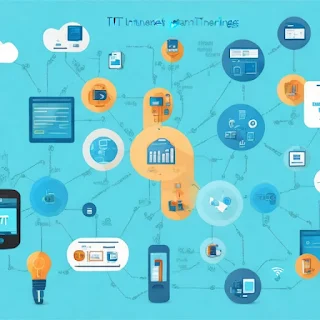
In this comprehensive guide, we will dive deep into understanding the Internet of Things (IoT) and its significance in our increasingly interconnected world. From the basics to the intricacies, we will demystify IoT and provide readers with a clear understanding of its key concepts and functionalities.

Definition and Core Concepts of IoT:

We begin by defining IoT as a network of interconnected physical devices, sensors, and software that communicate and exchange data with each other through the internet. We explain the importance of connectivity, data exchange, and the role of sensors in collecting real-time information.

How IoT Works:

In this section, we explore the underlying architecture and functioning of IoT. We break down the components, including devices, sensors, connectivity protocols, and cloud platforms. We explain how data is collected, transmitted, and analyzed, highlighting the role of gateways and IoT platforms in managing the massive influx of information.

Key Enablers of IoT:

We delve into the technologies that make IoT possible. This includes wireless communication technologies like Wi-Fi, Bluetooth, and cellular networks that facilitate device connectivity. We also discuss cloud computing and edge computing, which provide the necessary infrastructure for data storage, processing, and analysis.

Applications of IoT:

This section explores the vast array of applications where IoT is making a tangible impact. We highlight specific industries such as healthcare, agriculture, manufacturing, transportation, and smart cities, showcasing how IoT is revolutionizing processes, improving efficiency, and enabling data-driven decision-making. 

Benefits of IoT Implementation:

Here, we outline the numerous advantages that organizations and individuals can gain from adopting IoT solutions. We emphasize how IoT improves operational efficiency, reduces costs, enhances productivity, and enables better resource management. We also touch upon the positive societal impacts of IoT, such as improved healthcare outcomes, increased sustainability, and safer environments.

Challenges and Considerations:

While IoT offers immense potential, it also comes with challenges that need to be addressed. We discuss security concerns, privacy issues, and the need for robust data protection measures. Additionally, we touch upon scalability, interoperability, and the potential for technological obsolescence as factors to consider when implementing IoT solutions.

Future Trends and Innovations:

In this forward-looking section, we explore the emerging trends and innovations that will shape the future of IoT. We discuss advancements such as artificial intelligence (AI) integration, blockchain technology, 5G connectivity, and edge computing. We highlight how these developments will further enhance the capabilities of IoT and open up new possibilities. 

Real-World Applications of IoT: Transforming Industries and Enhancing Lives.
Internet of Things (IoT)
Real-world Applications of the Internet of Things (IoT)


Introduction:

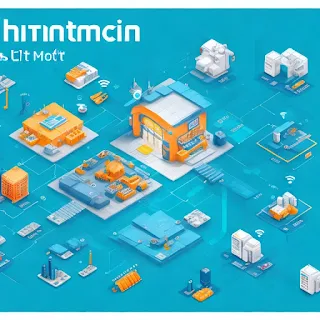
In this article, we delve into the real-world applications of the Internet of Things (IoT) and explore how this transformative technology is revolutionizing various industries and improving the way we live. From smart homes to healthcare, manufacturing, and beyond, we showcase the practical and impactful implementations of IoT in today's world.

Smart Homes:

We start by highlighting how IoT is transforming our living spaces. Smart home devices, such as connected thermostats, lighting systems, security cameras, and voice assistants, enable homeowners to control and automate their homes remotely. We discuss how IoT enhances comfort, energy efficiency, security, and convenience, making our homes more intelligent and responsive.

Healthcare:

In this section, we delve into the significant impact of IoT on the healthcare industry. We explore how IoT-enabled wearable devices, remote patient monitoring systems, and connected medical equipment are revolutionizing healthcare delivery. We discuss the benefits of real-time health monitoring, early disease detection, and personalized patient care, emphasizing how IoT improves patient outcomes and reduces healthcare costs.

Industrial IoT (IIoT):

The industrial sector is experiencing a major transformation with the advent of IoT. We showcase how IIoT applications are optimizing manufacturing processes, supply chain management, and asset tracking. By collecting and analyzing data from sensors embedded in machinery, factories can achieve predictive maintenance, minimize downtime, optimize resource allocation, and enhance overall operational efficiency.

Agriculture:

IoT is revolutionizing the agricultural landscape, ushering in the era of precision farming. We explain how IoT-enabled sensors and drones provide real-time data on soil moisture, temperature, and crop health. Farmers can make data-driven decisions on irrigation, fertilizer application, and disease control, resulting in increased crop yields, reduced resource wastage, and improved sustainability.

Transportation and Logistics:

In this section, we explore the impact of IoT on transportation and logistics. We discuss how IoT-enabled tracking devices and telematics systems monitor vehicle performance, optimize routes, and improve fleet management. We highlight the benefits of real-time visibility, improved fuel efficiency, and enhanced supply chain efficiency, leading to cost savings and better customer service.

Smart Cities:

IoT plays a crucial role in building smart and sustainable cities. We showcase how IoT applications, such as intelligent traffic management systems, smart street lighting, waste management, and environmental monitoring, are transforming urban living. We discuss the benefits of reduced congestion, energy savings, improved safety, and enhanced quality of life for citizens.

Retail and Customer Experience:

IoT is reshaping the retail industry, enhancing customer experiences both online and offline. We explore how IoT-powered beacons, smart shelves, and personalized marketing solutions enable retailers to deliver targeted promotions, optimize inventory, and create seamless shopping experiences. We discuss the potential for personalized recommendations, streamlined checkout processes, and improved customer satisfaction.

Advantages and Challenges of IoT: Navigating the Opportunities and Considerations.
Internet of Things (IoT)
Advantages and Disadvantages 


Introduction:

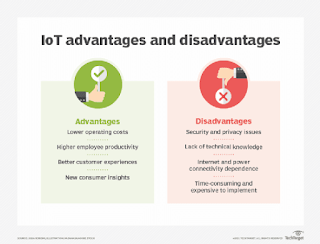
In this article, we delve into the advantages and challenges associated with the Internet of Things (IoT), shedding light on the benefits and considerations that organizations and individuals need to navigate. By understanding the advantages IoT brings and being aware of the challenges it presents, stakeholders can make informed decisions about adopting and implementing IoT solutions.

Advantages of IoT:

1.1 Improved Operational Efficiency:

We discuss how IoT enables organizations to optimize processes, automate tasks, and improve operational efficiency. Real-time data collection, analysis, and automation result in streamlined operations, reduced errors, and increased productivity.

1.2 Cost Savings:

We highlight how IoT implementations can lead to cost savings. Examples include predictive maintenance, where IoT sensors can detect and address equipment issues before they escalate, and energy management systems that optimize resource usage, resulting in reduced operational costs.

1.3 Enhanced Customer Experience:

IoT empowers businesses to deliver personalized and seamless customer experiences. Through IoT-enabled devices, organizations can gather valuable insights, provide personalized recommendations, and offer convenient, connected services to their customers.

1.4 Data-Driven Decision-Making:

We emphasize how IoT generates vast amounts of data that can be analyzed to gain valuable insights. Data-driven decision-making enables organizations to make informed choices, identify trends, and uncover opportunities for growth and optimization.

Challenges and Considerations of IoT:

2.1 Security and Privacy:

We discuss the inherent security risks in IoT systems, such as unauthorized access, data breaches, and potential privacy violations. Highlighting the need for robust security measures and encryption protocols, we emphasize the importance of protecting sensitive data and maintaining user privacy.

2.2 Interoperability and Standards:

We address the challenge of ensuring interoperability among various IoT devices and platforms. The lack of uniform standards and protocols can hinder seamless communication and data exchange between different devices, potentially limiting the scalability and effectiveness of IoT solutions.

2.3 Scalability and Infrastructure:

IoT implementations require scalable infrastructure to accommodate the increasing number of connected devices and the vast amount of data generated. We explore the challenges of scaling IoT systems and the need for robust networks, data storage, and processing capabilities.

2.4 Complexity and Technical Expertise:

Implementing IoT solutions can be complex, requiring expertise in areas such as hardware, software, networking, and data analytics. We discuss the challenge of acquiring and retaining skilled professionals who can design, deploy, and manage IoT systems effectively.

The Future of IoT: Exploring Emerging Trends and Innovations.

Internet of Things (IoT)
Trends and Innovations


Introduction:

In this article, we explore the exciting future of the Internet of Things (IoT) and the trends and innovations that will shape its trajectory. From cutting-edge technologies to evolving industry applications, we provide insights into the advancements that will further propel IoT into the future.

Edge Computing:

We discuss how edge computing is revolutionizing IoT by enabling data processing and analysis at the network's edge, closer to the source of data generation. This trend reduces latency, enhances real-time decision-making capabilities, and minimizes reliance on cloud infrastructure.

Artificial Intelligence (AI) Integration:

We explore the integration of AI algorithms and machine learning techniques with IoT systems. By combining AI with IoT-generated data, organizations can unlock powerful insights, improve predictive capabilities, automate processes, and enhance overall system intelligence. 

5G Connectivity:

We highlight the transformative impact of 5G connectivity on IoT. With its high bandwidth, low latency, and ability to connect a massive number of devices, 5G will enable faster and more reliable communication, facilitating the proliferation of IoT devices and applications.

Blockchain and IoT:

We discuss how blockchain technology can enhance security, privacy, and trust in IoT systems. By providing a decentralized and tamper-resistant ledger, blockchain can ensure secure data exchange, verify device identities, and enable transparent and auditable transactions in IoT ecosystems.

Smart Cities and Infrastructure:

We explore how IoT is set to revolutionize urban environments and infrastructure. Smart city initiatives, powered by IoT technologies, will enhance energy management, optimize transportation, improve public safety, and enable efficient resource allocation to create sustainable and livable cities.

Industrial IoT (IIoT) Advancements:

We delve into the advancements in Industrial IoT, where IoT applications are transforming industrial processes, supply chains, and asset management. Innovations such as digital twins, predictive maintenance, and AI-powered analytics will drive increased productivity, cost savings, and operational efficiency in industrial settings.

Wearable Technology and Healthcare:

We discuss the future of wearable devices and their integration with healthcare systems. IoT-enabled wearable’s will continue to advance remote patient monitoring, personalized healthcare delivery, and early disease detection, empowering individuals to take control of their health and well-being.

Environmental Monitoring and Sustainability:

We emphasize the growing importance of IoT in environmental monitoring and sustainability efforts. IoT sensors and devices can collect real-time data on air quality, water management, waste management, and energy consumption, enabling informed decision-making and promoting sustainable practices.

Conclusion:

Internet of Things (IoT)
IoT's Transformative Power


As we conclude our journey into the world of IoT, it becomes clear that we are standing at the precipice of a connected revolution. IoT's transformative power is already making a significant impact across industries and will continue to shape the way we live and interact with technology. From improving efficiency and productivity to enhancing our daily lives and addressing global challenges, IoT presents a myriad of opportunities. Embracing IoT and its potential can empower businesses and individuals to thrive in an increasingly connected world.
Tuesday, 16 May 2023

The Toyota Corolla: A Reliable and Affordable Compact Car.

The Toyota Corolla: A Reliable and Affordable Compact Car.

Toyota Corolla Review.

In The Toyota Corolla Review this is a compact car that has been popular
for decades, and for good reason. It offers a winning combination of
reliability, affordability, and fuel efficiency that makes it an attractive
option for many car buyers. In this article, we'll take a closer look at the
features that make the Corolla stand out and why it's a great choice for anyone
in the market for a compact car.
Toyota Corolla
Toyota Corolla

Toyota Corolla
Toyota Corolla


Main Toyota Corolla Features Or The Toyota corolla specifications.

  1. The Toyota corolla Reliability.

  2. The Toyota corolla Affordability.

  3. The Toyota corolla Fuel efficiency.

  4. The Toyota corolla Wide availability.

  5. The Toyota corolla Safety Features.

Short overview of Toyota Corolla Features or The Toyota corolla specifications.

The Toyota corolla Reliability:

The Toyota Corolla has a reputation for being a reliable car that is built to last. It has been a top-selling car for many years and has earned a reputation for being durable, low-maintenance, and long-lasting. This is due to Toyota's quality manufacturing processes, attention to detail, and long-term focus on building cars that are designed to go the distance. The Corolla's longevity and low maintenance costs make it an excellent value for anyone who wants a car that will provide years of dependable service.

The Toyota corolla Affordability:    

The Toyota Corolla is also known for being an affordable car, with a base model price that is competitive with other cars in its class. It is designed to be easy and inexpensive to maintain, with low maintenance costs that make it an excellent value over the long term. Its fuel efficiency also helps reduce fuel costs, making it an excellent option for anyone who wants a car that won't break the bank.

The Toyota corolla Fuel Efficiency:

Speaking of fuel efficiency, the Toyota Corolla is one of the most fuel-efficient cars on the market, with a fuel economy that ranges from 29-36 miles per gallon depending on the model and transmission type. This means that drivers can save money on gas while also reducing their carbon footprint. The Corolla's aerodynamic design and efficient engine also contribute to its fuel efficiency, making it an excellent choice for anyone who wants to reduce their environmental impact.

The Toyota corolla Wide availability:

The Corolla is sold in many countries around the world, and is available in a variety of configurations to suit local markets. Its availability and adaptability make it an attractive choice for a wide range of consumers.

The Toyota corolla Safety Features:

The Toyota Corolla is also packed with safety features that help protect drivers and passengers in the event of a collision. It comes with a suite of advanced safety features, including a rearview camera, lane departure warning, forward collision warning, and automatic emergency braking. These features help make the Corolla a safe and secure choice for anyone who wants a car that puts safety first.

Details of Toyota Corolla Features Or The Toyota corolla specifications,

Toyota Corolla Reliability.

The Toyota Corolla has a reputation for being a reliable car, and this reputation has been built over decades of production. The Corolla is known for its durability, low maintenance costs, and long lifespan, which are all factors that contribute to its reliability. Here are some reasons why the Toyota Corolla is considered a reliable car:

Toyota Corolla Reliability


  • Quality manufacturing: Toyota is known for its attention to detail and quality control processes, which help ensure that the Corolla is built to a high standard. This results in a car that is less prone to problems and breakdowns.
  • Longevity: Many Corolla owners report driving their cars for 200,000 miles or more, which is a testament to the car's durability. The Corolla's engine, transmission, and other components are designed to last for a long time with proper maintenance.
  • Low maintenance costs: The Corolla is designed to be easy and inexpensive to maintain. Routine maintenance tasks like oil changes and tire rotations are straightforward and don't require specialized tools or knowledge.
  • Warranty: Toyota offers a standard warranty on new Corollas that covers most major components for up to three years or 36,000 miles, whichever comes first. This provides peace of mind for new car buyers and can help reduce the cost of unexpected repairs.
  • Overall, the Toyota Corolla's reputation for reliability is well-deserved, and this is a major factor in its popularity among car buyers.

Toyota Corolla Affordability.

The Toyota Corolla is known for being an affordable car option for many consumers. The Corolla's pricing is competitive in the compact car market, and its relatively low price point makes it an attractive choice for those who prioritize value for their money. Here are some reasons why the Toyota Corolla is considered an affordable car:

  • Base model pricing: The Toyota Corolla has a starting price that is relatively low compared to other cars in its class. The base model is well-equipped and offers a good value for its price.
  • Fuel efficiency: The Corolla's fuel efficiency is another factor that contributes to its affordability. Its efficient engine and lightweight design help it achieve good gas mileage, which can help reduce fuel costs over time.
  • Low maintenance costs: The Corolla is designed to be easy and inexpensive to maintain. Routine maintenance tasks like oil changes and tire rotations are straightforward and don't require specialized tools or knowledge.
  • Resale value: The Toyota Corolla is known for having a high resale value, which can help offset the cost of ownership over time. This means that even if the initial purchase price is higher than some competitors, the Corolla can still be a more affordable option in the long run.
  • Overall, the Toyota Corolla's combination of low pricing, fuel efficiency, low maintenance costs, and high resale value make it an affordable option for many car buyers.

Toyota Corolla Fuel efficiency or Toyota Corolla MPG (miles per gallon).

The Toyota Corolla is known for being a fuel-efficient Or the give high MPG (miles per gallon) car, and this is one of the factors that contribute to its popularity. Here are some reasons why the Toyota Corolla is considered a fuel-efficient car:

Toyota Corolla Fuel efficiency


  • Engine design: The Corolla's engine is designed to be efficient, with features like variable valve timing and a lightweight design that help reduce fuel consumption.
  • Transmission options: The Corolla is available with a manual or automatic transmission, and both options are designed to be efficient. The manual transmission in particular can help improve fuel economy, especially for drivers who are skilled at driving a manual transmission.
  • Aerodynamics: The Corolla's exterior design is aerodynamic, which helps reduce wind resistance and improve fuel efficiency. Hybrid option: In addition to traditional gasoline-powered models, the Corolla is also available as a hybrid. The hybrid model uses a combination of gasoline and electric power to achieve even higher fuel efficiency.
  • Overall, the Toyota Corolla's fuel efficiency is a major factor in its popularity, especially in regions where gasoline prices are high or where environmental concerns are a priority. The Corolla's efficient engine design, transmission options, aerodynamics, and hybrid option all contribute to its reputation for fuel efficiency.

Toyota Corolla Wide availability.

The Toyota Corolla is sold in many countries around the world and is one of the most widely available cars on the market. Its global availability is due to several factors, including:

  • Manufacturing facilities: Toyota has manufacturing facilities in many countries around the world, which allows it to produce the Corolla locally and distribute it to nearby markets. This helps reduce costs and improve availability.
  • Market adaptability: The Corolla is designed to be adaptable to local markets, which means that it can be customized to meet the needs and preferences of consumers in different regions. This makes it an attractive choice for buyers in many different countries.
  • Brand recognition: Toyota is a well-known and respected brand in many parts of the world, and this helps to increase the demand for the Corolla. The brand's reputation for quality and reliability also helps to build trust among consumers.
  • Dealer network: Toyota has a large and well-established dealer network in many countries, which makes it easy for consumers to find and purchase a Corolla. This also helps to ensure that parts and service are readily available.
  • Overall, the Toyota Corolla's wide availability is a major factor in its popularity and success as a global car brand. Its adaptability to local markets, brand recognition, and dealer network all contribute to its widespread availability.

Toyota Corolla Safety Features.

The Toyota Corolla is known for its impressive safety features that are designed to protect both the driver and passengers in the event of a collision. Here are some of the top safety features of the Toyota Corolla:

Toyota Corolla Safety Features

Toyota Corolla Safety Features


  • Toyota Safety Sense 2.0: The Corolla comes equipped with Toyota Safety Sense 2.0, a suite of advanced safety features that includes pre-collision system with pedestrian detection, lane departure alert with steering assist, automatic high beams, and dynamic radar cruise control. These features work together to help prevent accidents and keep occupants safe.
  • Blind Spot Monitor: The Corolla also comes with a blind spot monitor, which uses radar to detect vehicles in the driver's blind spot. If a vehicle is detected, the system will alert the driver with an audible and visual warning.
  • Rear Cross-Traffic Alert: When backing up, the Corolla's rear cross-traffic alert system uses radar to detect vehicles approaching from either side. If a vehicle is detected, the system will alert the driver with an audible and visual warning.
  • Eight Airbags: The Corolla comes with eight airbags as standard, including front, side, curtain, and knee airbags. This provides occupants with comprehensive protection in the event of a collision.
  • Star Safety System: The Corolla also features the Star Safety System, which includes a range of safety technologies such as vehicle stability control, traction control, anti-lock brake system, electronic brake-force distribution, brake assist, and smart stop technology. These features work together to help the driver maintain control of the vehicle and avoid accidents.
  • LATCH System: For parents with young children, the Corolla comes with the LATCH system, which allows for easy installation of child safety seats in the back seat.
  • Overall, the Toyota Corolla's safety features are designed to provide comprehensive protection for occupants in the event of an accident. Whether you're commuting to work, running errands, or taking a road trip, the Corolla's safety features can give you peace of mind knowing that you and your passengers are well-protected.

Conclusion:

The Toyota Corolla is a reliable, affordable and fuel-efficient compact car that is packed with features that make it an excellent choice for anyone in the market for a new car. Its reputation for realizability, low maintenance costs, and high resale value make it an excellent long-term investment, while its fuel efficiency and safety features make it an excellent choice for anyone who wants car that is both eco-friendly and safe. Whether you're a new driver, a family in need of a second car, or anyone who wants a reliable and affordable car, the Toyota Corolla is an excellent choice that won't disappoint.


Web3 SEO Strategies: Boosting Organic Traffic and Visibility

Web3 is a term that describes the next generation of the internet, where users have more control over their data, identity, and online trans...